Keynote Speakers
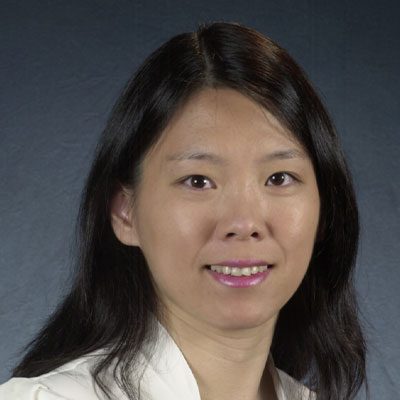
Wei Wang
Leonard Kleinrock Chair Professor
UCLA
From Hypothesis to Discovery: The Rise of AI Agents in Science
The rapid rise of large language models (LLMs) has catalyzed a new paradigm in scientific discovery: the emergence of autonomous, agent-based systems that operate across varying levels of independence. These language-driven agents offer a flexible and powerful framework for coordinating interactions among human scientists, natural language, programming environments, and physical systems...
From Hypothesis to Discovery: The Rise of AI Agents in Science
The rapid rise of large language models (LLMs) has catalyzed a new paradigm in scientific discovery: the emergence of autonomous, agent-based systems that operate across varying levels of independence. These language-driven agents offer a flexible and powerful framework for coordinating interactions among human scientists, natural language, programming environments, and physical systems. In this talk, we present our perspective on LLM-based scientific agents and their expanding role in reshaping the end-to-end discovery process—from hypothesis generation and experimental design to execution, analysis, and iterative refinement. We highlight recent advances, practical demonstrations, and key technological breakthroughs, while also examining current limitations. Finally, we discuss open research challenges and outline promising directions toward developing more robust, generalizable, and adaptive scientific agents capable of driving the next generation of discovery.
Bio
Wei Wang is the Leonard Kleinrock Chair Professor in Computer Science and Computational Medicine at University of California, Los Angeles (UCLA). She is the chair of the Computer Science Department and the director of the Scalable Analytics Institute (ScAi). She received her PhD degree in Computer Science from UCLA in 1999. She was a professor at UNC Chapel Hill 2002–2012, and was a research staff member at IBM Watson 1999–2002. Dr. Wang's research interests include AI, machine learning, big data analytics, data mining, natural language processing, AI for Science. She has filed seven patents, and has published more than four hundred research papers, with multiple best paper awards. Dr. Wang is a fellow of both ACM and IEEE. She is the recipient of the 2026 ACM SIGKDD Innovation Award.
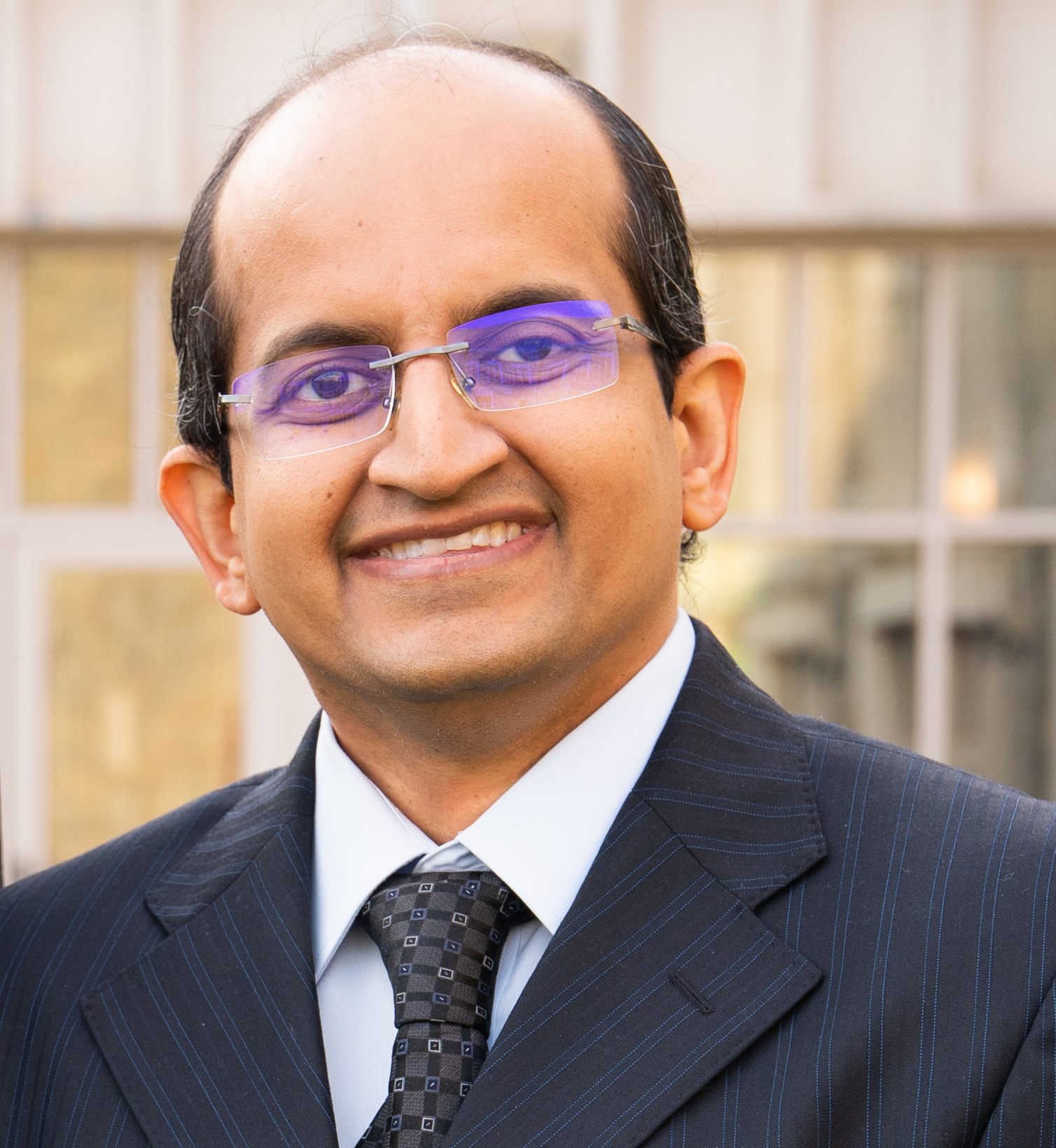
Chandan Reddy
Professor
Virginia Tech
Scientific Reasoning with Foundation Models: From Mechanistic Hypotheses to Active Experimentation
Recent reasoning systems plan, invoke tools, and iteratively refine their solutions, with striking progress in coding, mathematics, and decision making. Scientific discovery offers a distinctive and demanding test of these capabilities because it requires not only solving a posed problem, but reasoning about plausible hypotheses, discriminating evidence, experiment selection, and revision as observations accumulate...
Scientific Reasoning with Foundation Models: From Mechanistic Hypotheses to Active Experimentation
Recent reasoning systems plan, invoke tools, and iteratively refine their solutions, with striking progress in coding, mathematics, and decision making. Scientific discovery offers a distinctive and demanding test of these capabilities because it requires not only solving a posed problem, but reasoning about plausible hypotheses, discriminating evidence, experiment selection, and revision as observations accumulate. In this talk, I frame scientific discovery as mechanistic reasoning. Many AI-for-science systems operate on fixed datasets and focus on a single stage of discovery, such as fitting an equation, screening a candidate, or optimizing a property. In contrast, scientific reasoning requires a closed loop: forming interpretable hypotheses, testing them against evidence, remembering confirmed and falsified explanations, and selecting new observations that reduce uncertainty.
Within this framing, large language models and foundation models can serve as reasoning components inside scientific agents. These agents represent hypotheses as symbolic equations, programs, causal structures, or candidate designs; refine them using structured search and data-driven feedback; and reason about what experiments to perform next. This perspective also exposes a central challenge: distinguishing genuine discovery from the recall of memorized knowledge, motivating benchmarks that test mechanism recovery, out-of-distribution generalization, and memorization-resistant reasoning.
Active experimentation then emerges as a key step toward next-generation scientific reasoning systems. Fixed datasets can leave multiple mechanisms equally consistent with current observations. By choosing experiments where competing hypotheses make different predictions, closed-loop agents can reduce identifiability gaps and improve sample efficiency. The talk closes with a perspective on autonomous laboratories where reasoning agents make hypotheses explicit, testable, and reproducible while accelerating human scientific reasoning.
Bio
Chandan Reddy is a Professor in the Department of Computer Science at Virginia Tech. He received his Ph.D. from Cornell University and his M.S. from Michigan State University. His primary research interests are Generative AI and Trustworthy Machine Learning, aimed at creating robust, fair, and explainable models for Scientific Discovery and Real-World Impact. Dr. Reddy's research has been funded by organizations such as the NSF, NIH, DOE, DOT, and various industries. He has authored over 200 peer-reviewed articles in leading conferences and journals. He received several awards for his research work including the Best Application Paper Award at the ACM SIGKDD conference in 2010, the Best Poster Award at the IEEE VAST conference in 2014, and the Best Student Paper Award at the IEEE ICDM conference in 2016. He was also a finalist in the INFORMS Franz Edelman Award Competition in 2011. He serves (or has served) on the editorial boards of journals such as ACM TKDD, ACM TIST, NPJ AI, and IEEE Big Data. He is a Senior Member of the IEEE and a Distinguished Member of the ACM. More information about his work is available at https://creddy.net.
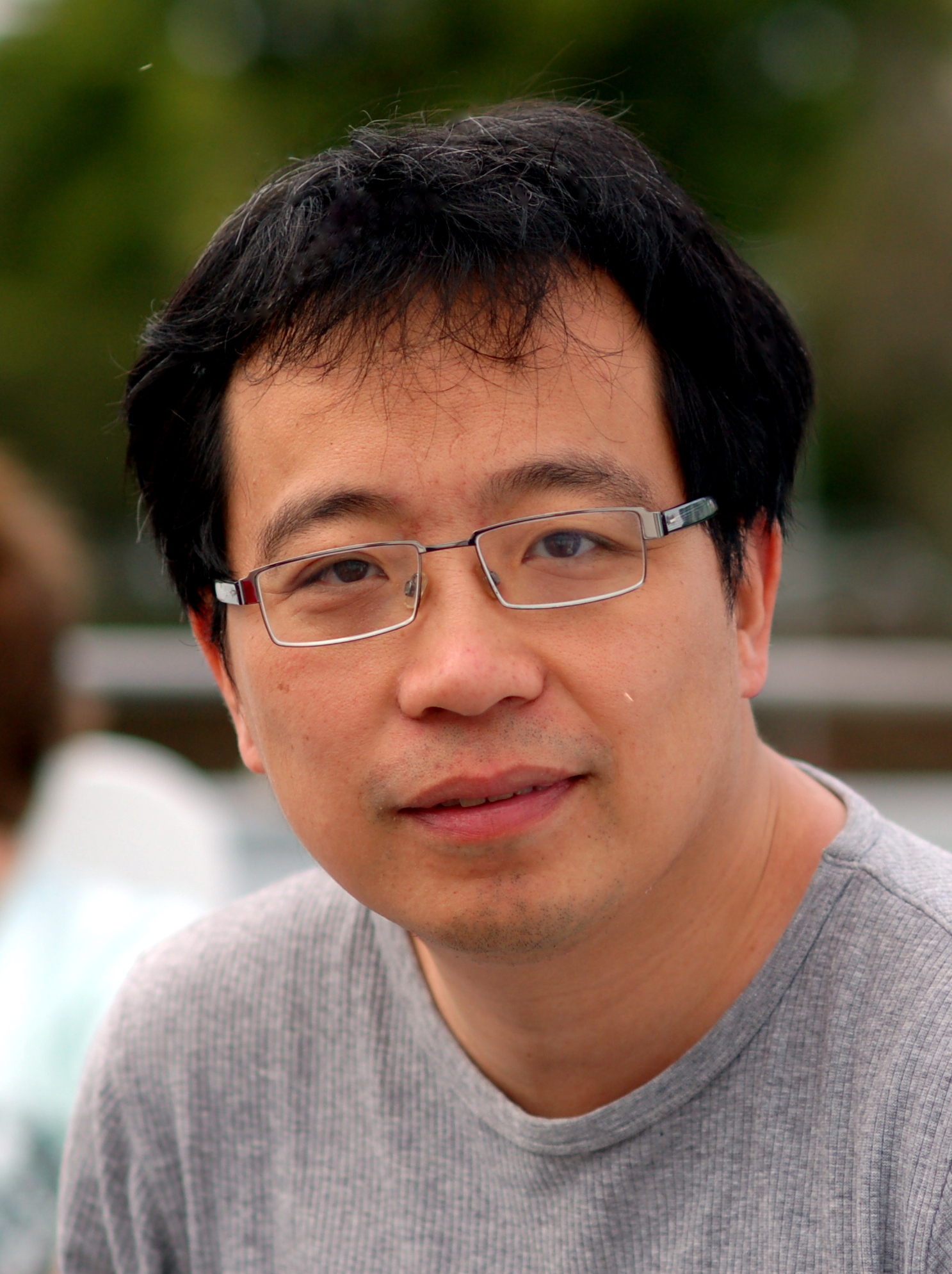
Haixun Wang
VP of Engineering & Head of AI
EvenUp
From Understanding to Memory to Imagination
Human understanding begins in conversation: asking the right question, recognizing uncertainty, and gradually forming a model of another person. But it also depends on memory: the ability to connect present situations with past experiences by pattern and meaning, not just by topic...
From Understanding to Memory to Imagination
Human understanding begins in conversation: asking the right question, recognizing uncertainty, and gradually forming a model of another person. But it also depends on memory: the ability to connect present situations with past experiences by pattern and meaning, not just by topic. This talk explores two capabilities for more human-centered AI. First, adaptive conversation: systems that choose what to ask next in order to understand a person efficiently and purposefully, especially in settings like reciprocal matchmaking where compatibility must be mutual. Second, structural memory: systems that retrieve memories not because they share words or topics, but because they share deeper relational patterns. Together, these ideas point toward AI that does more than answer questions or store profiles. It learns through interaction, remembers through analogy, and begins to understand the recurring shapes of human experience.
Bio
Haixun Wang is an ACM Fellow, IEEE Fellow, Editor-in-Chief of the IEEE Data Engineering Bulletin, a trustee on the board of VLDB, and an affiliate professor at the University of Washington. He is currently the VP of Engineering and Head of AI at EvenUp, where he focuses on leveraging LLMs and generative AI for legal and medical document understanding and generation, building CoPilot-like support for lawyers, and advancing litigation workflows. Prior to EvenUp, he held leadership roles in AI, applied science, NLP, and knowledge bases at Instacart, WeWork, Amazon, and Meta. Before that, he was a researcher in the labs of Microsoft, Google, and IBM. Dr. Wang has published over 200 research papers in top international journals and conference proceedings. His work has been recognized with several prestigious awards, including the 10-Year ICDE Influential Paper Award (2024), the ICDE Best Paper Award (2015), the ICDM 10-Year Best Paper Award (2013), and the Best Paper Award at ER (2009).
Invited Speakers
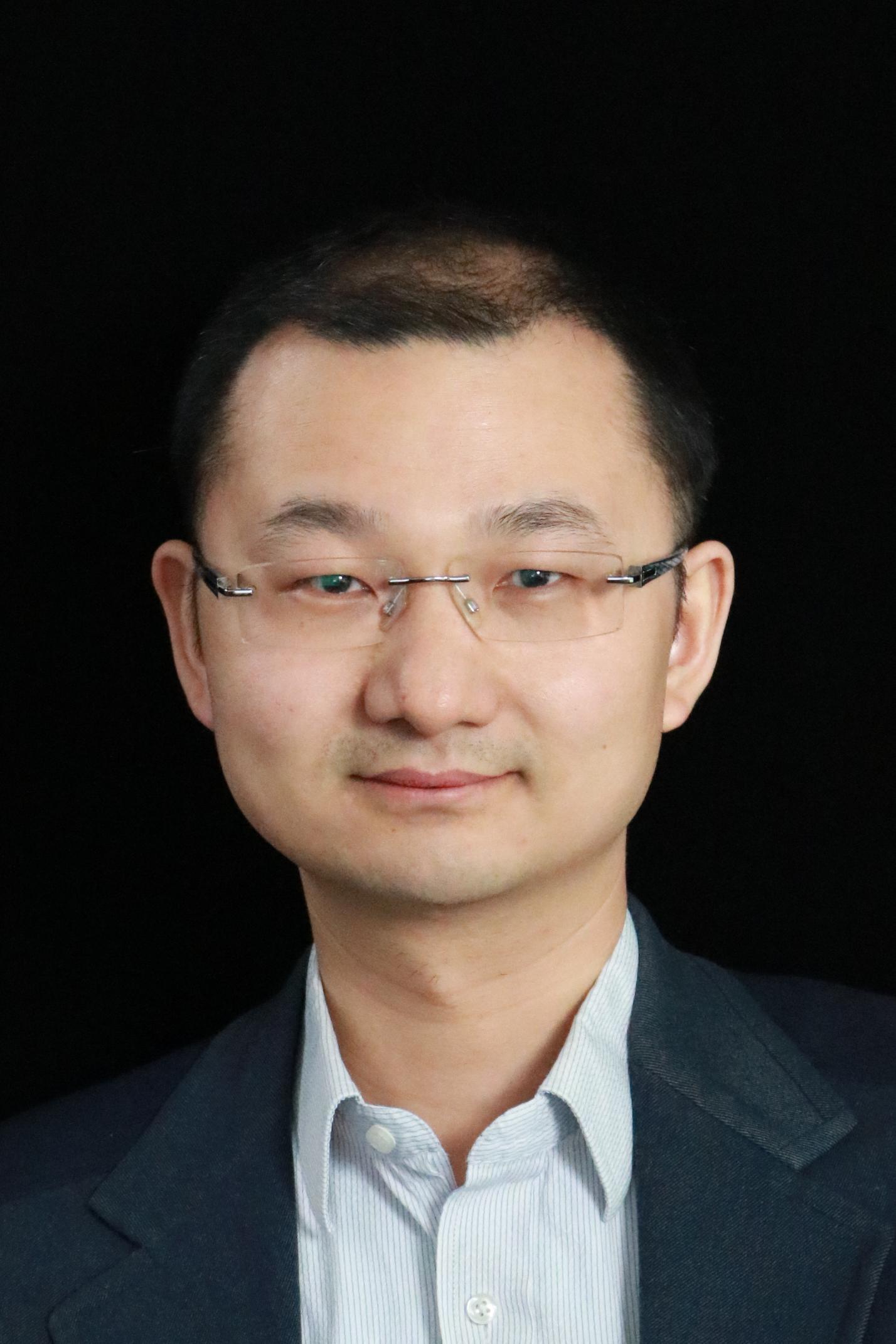
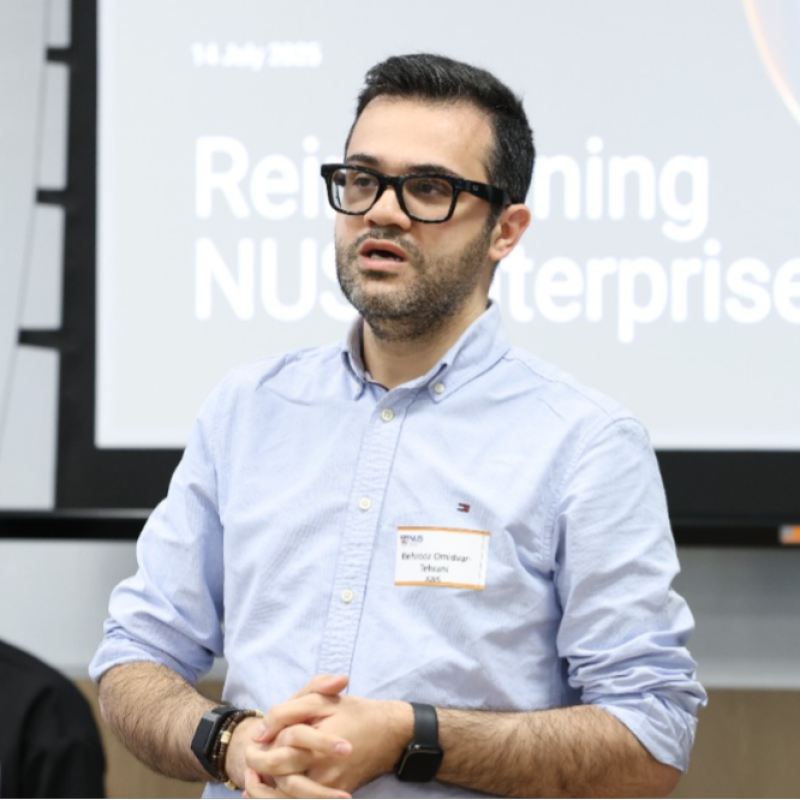
Junjie Tang & Behrooz Omidvar-Tehrani
AWS
Joint Talk: Building Reliable Coding Agents with Reasoning Harnesses and Memory
AI coding agents demonstrate strong reasoning capabilities, yet their reliability on real-world software engineering tasks remains inconsistent. We present a two-timescale approach that combines harness-guided reasoning within a task with persistent memory across tasks and sessions...
Joint Talk: Building Reliable Coding Agents with Reasoning Harnesses and Memory
AI coding agents demonstrate strong reasoning capabilities, yet their reliability on real-world software engineering tasks remains inconsistent. We present a two-timescale approach that combines harness-guided reasoning within a task with persistent memory across tasks and sessions. A structural harness provides feedforward constraints and feedback signals that guide planning, tool use, validation, and iterative correction without modifying the underlying model. In NKI-Agent, the same frontier model improves from 6% to 83% pass rate on a 150-task kernel generation benchmark when wrapped in a compile-verify-fix loop on real AWS Trainium hardware; a domain-specialized model achieves 25% at 1/100th the cost. A constrained compile-profile-reason loop further reduced kernel latency from 67 milliseconds to 6.2 milliseconds, enabling the agent to discover an effective memory-pressure optimization through iterative hardware feedback. Persistent memory complements this reasoning scaffold by retaining repository knowledge, developer intent, successful strategies, prior failures, and corrective signals for use in future tasks. Together, harnesses generate structured experiences that can be consolidated into memory, while memory provides relevant guidance for subsequent reasoning. We discuss how this closed-loop architecture improves correctness, efficiency, adaptation, long-horizon consistency, and developer trust — and how it industrializes through a Delivery Agent used by 4,000+ practitioners daily — reframing coding-agent reliability as a systems challenge of reasoning effectively in the moment and learning from experience over time.
Bio
Junjie Tang is a Sr. Principal at AWS with 9 years of experience driving AI adoption across enterprise customers. His research focuses on agentic AI systems, multi-agent coordination, and hardware-aware kernel optimization on AWS Trainium. He leads the development of AgentCorp (multi-agent software simulation), harness-engineering-kit (agent governance framework), and kernel-forge (NKI kernel generation on Trainium). His blog on NKI agent optimization, “Beating Claude Opus 4.5 at Kernel Generation with a 3B-Active RL Agent”, demonstrated that constrained iterative reasoning can outperform frontier models at hardware-level tasks.
Behrooz Omidvar-Tehrani is a Senior Applied Scientist and Science Manager at AWS Agentic AI, working on next-generation coding agents and developer-focused AI systems. He has published across venues such as ICML, ICLR, CHI, CIKM, SIGMOD, and KDD. His research focuses on scalable, reliable, and human-centered AI systems for software engineering, with an emphasis on agentic reasoning, continual learning, and self-improving agents.
Dongjin Song
Associate Professor
University of Connecticut
Toward Interpretable and Trustworthy Time-Series Reasoning
Time-series foundation models have rapidly advanced forecasting in various applications, but most systems still lack the ability to reason over temporal patterns, multimodal context, retrieved evidence, and model choices. This talk presents a line of work toward interpretable and trustworthy time-series reasoning...
Toward Interpretable and Trustworthy Time-Series Reasoning
Time-series foundation models have rapidly advanced forecasting in various applications, but most systems still lack the ability to reason over temporal patterns, multimodal context, retrieved evidence, and model choices. This talk presents a line of work toward interpretable and trustworthy time-series reasoning. I will first discuss our vision for time-series reasoning, which emphasizes faithful reasoning paths, multimodal context, and system-level evaluation; Next, I will introduce TimeXL, an explainable multimodal framework that combines prototype-based temporal evidence with LLM agents for prediction, reflection, and refinement, and TimeRouter, a lightweight routing framework that adaptively selects or combines frozen time-series foundation models through discriminative routing, selective gating, and ensemble fallback. I will also briefly discuss how retrieval-augmented models such as TS-RAG can complement these systems by grounding forecasts in historical exemplar trajectories. Together, these works suggest a path from standalone forecasting models toward agentic temporal intelligence systems that can explain, adapt, and support reliable decision making.
Bio
Dongjin Song is an Associate Professor in the School of Computing at the University of Connecticut. Before joining UConn, he was a Research Staff Member at NEC Laboratories America in Princeton, New Jersey, from July 2016 to July 2020. He received his Ph.D. in Electrical and Computer Engineering from the University of California, San Diego in 2016. His research interests span machine learning, data science, deep learning, time series analysis, graph representation learning, and their real-world applications. His work has been published in premier conferences in artificial intelligence and data science, including NeurIPS, ICML, ICLR, KDD, ICDM, SDM, AAAI, IJCAI, CVPR, and ICCV. Four of his papers, DA-RNN at IJCAI 2017, HetGNN at KDD 2019, MSCRED at AAAI 2019, and Empowering Time Series Analysis with LLMs at IJCAI 2024, have been recognized as the most influential papers by PaperDigest.org. Dr. Song is the recipient of several prestigious awards, including the NSF CAREER Award in 2024, the Frontiers of Science Award in Computer Science in 2024, the UConn AAUP Excellence Award for Research and Creativity – Early Career in 2025, the AI 2000 Most Influential Scholar Award Honorable Mention in Data Mining in 2025, the NEC Faculty Research Award in 2025, and the Best Paper Award (3rd Place CCC Award) in the Blue Sky Track at ICDM 2025. He was also elected as one of 11 AAAI Senior Members in the Class of 2026. He serves as an Associate Editor for ACM Computing Surveys, Neural Networks, and Pattern Recognition, and has served as an Area Chair or Senior Program Committee member for top conferences such as NeurIPS, ICML, ICLR, AAAI, IJCAI, ICDM, CIKM, and PAKDD. He is also a co-organizer of the AI for Time Series workshop series at AAAI, IJCAI, ICDM, and SDM, and the Mining and Learning from Time Series workshop at KDD.
Minjae Lee
AI Researcher
FuriosaAI
Power-Efficient AI Reasoning for the Agentic Inference Era
Large language models are moving toward an agentic inference era, where they perform wider search and longer reasoning with tool interactions, thereby spending substantially more computation at test time. As this shift accelerates, model usage is rapidly increasing, and the energy required to run AI systems is becoming a fundamental bottleneck for keeping AI scalable...
Power-Efficient AI Reasoning for the Agentic Inference Era
Large language models are moving toward an agentic inference era, where they perform wider search and longer reasoning with tool interactions, thereby spending substantially more computation at test time. As this shift accelerates, model usage is rapidly increasing, and the energy required to run AI systems, from individual servers to large-scale data centers, is becoming a fundamental bottleneck for keeping AI scalable. In this talk, we introduce FuriosaAI's inference-first approach to this challenge, spanning the vertical stack from hardware architecture to software systems and deep learning algorithms. Toward high-performance, power-efficient inference with flexible programmability, we first discuss why power efficiency has become central to LLM deployment, and how FuriosaAI's Tensor Contraction Processor (TCP) architecture is designed to support efficient LLM inference through flexible dataflow and predictable performance. We then connect this hardware-software foundation to reasoning-focused algorithmic research, including inference-engaged training such as reinforcement learning and on-policy distillation, as well as inference scaling and acceleration methods such as speculative decoding and test-time compute scaling. The talk highlights how co-design across silicon, software, and algorithms can enable more capable, efficient, and scalable AI reasoning systems.
Bio
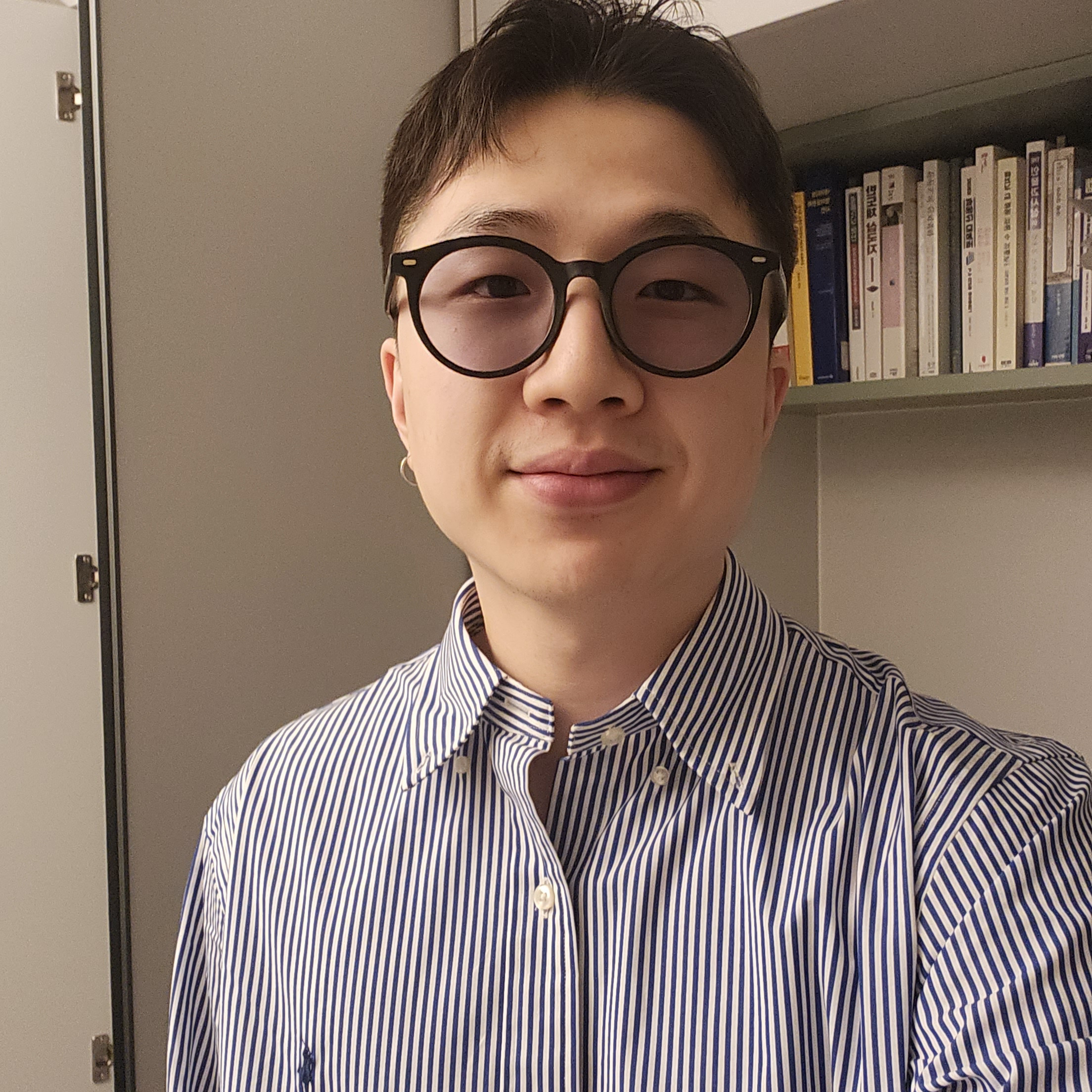
Minjae Lee is an AI Researcher on FuriosaAI's Algorithm team, working on agentic LLM inference. His research spans inference acceleration, scaling, and training for agentic LLMs, including speculative decoding, test-time compute scaling, and reinforcement learning. He also works on healthcare AI, including electronic health records and medical LLM applications. He received his M.S. in Artificial Intelligence from KAIST under Prof. Edward Choi and his B.S. in Industrial Engineering from KAIST, graduating Summa Cum Laude.
About FuriosaAI
FuriosaAI is building inference-first AI infrastructure. Its flagship RNGD accelerator, based on the Tensor Contraction Processor (TCP) architecture, is designed to deliver (1) high-performance execution, (2) power-efficient inference, and (3) flexible programmability for LLMs and multimodal models. By co-designing hardware, compiler, platform, and algorithms, FuriosaAI aims to make large-scale AI deployment practical for real-world data centers.
Akari Asai
Assistant Professor
Carnegie Mellon University
Beyond Verifiable Answers: Evaluating and Training Deep Research Agents
Deep research agents plan, search, and synthesize evidence into long-form, well-attributed reports. Unlike tasks with verifiable answers, however, their outputs rarely have a single correct solution or a reliable binary reward. Quality is inherently multidimensional, depending on factual accuracy, coverage, citation quality, and effective use of evidence...
Beyond Verifiable Answers: Evaluating and Training Deep Research Agents
Deep research agents plan, search, and synthesize evidence into long-form, well-attributed reports. Unlike tasks with verifiable answers, however, their outputs rarely have a single correct solution or a reliable binary reward. Quality is inherently multidimensional, depending on factual accuracy, coverage, citation quality, and effective use of evidence. This talk explores how rubrics can provide scalable, task-specific feedback for both evaluating and training such open-ended systems.
First, I will discuss the evaluation framework developed for OpenScholar (Nature, 2026) for long-form, citation-grounded scientific synthesis. It combines rubric-based assessment of report quality with fine-grained verification of citation correctness and completeness. These automated evaluations show strong agreement with expert judgments and reveal key strengths and limitations of current deep research systems.
Next, I will present DR Tulu (ICML 2026 Oral), an open model trained end-to-end for long-form deep research using Reinforcement Learning with Evolving Rubrics. In this approach, evaluation rubrics are dynamically generated and refined alongside the policy, providing increasingly discriminative feedback for open-ended outputs. Despite having only 8 billion parameters, DR Tulu achieves competitive performance across scientific, healthcare, and general-domain benchmarks at substantially lower cost than much larger proprietary systems.
Bio
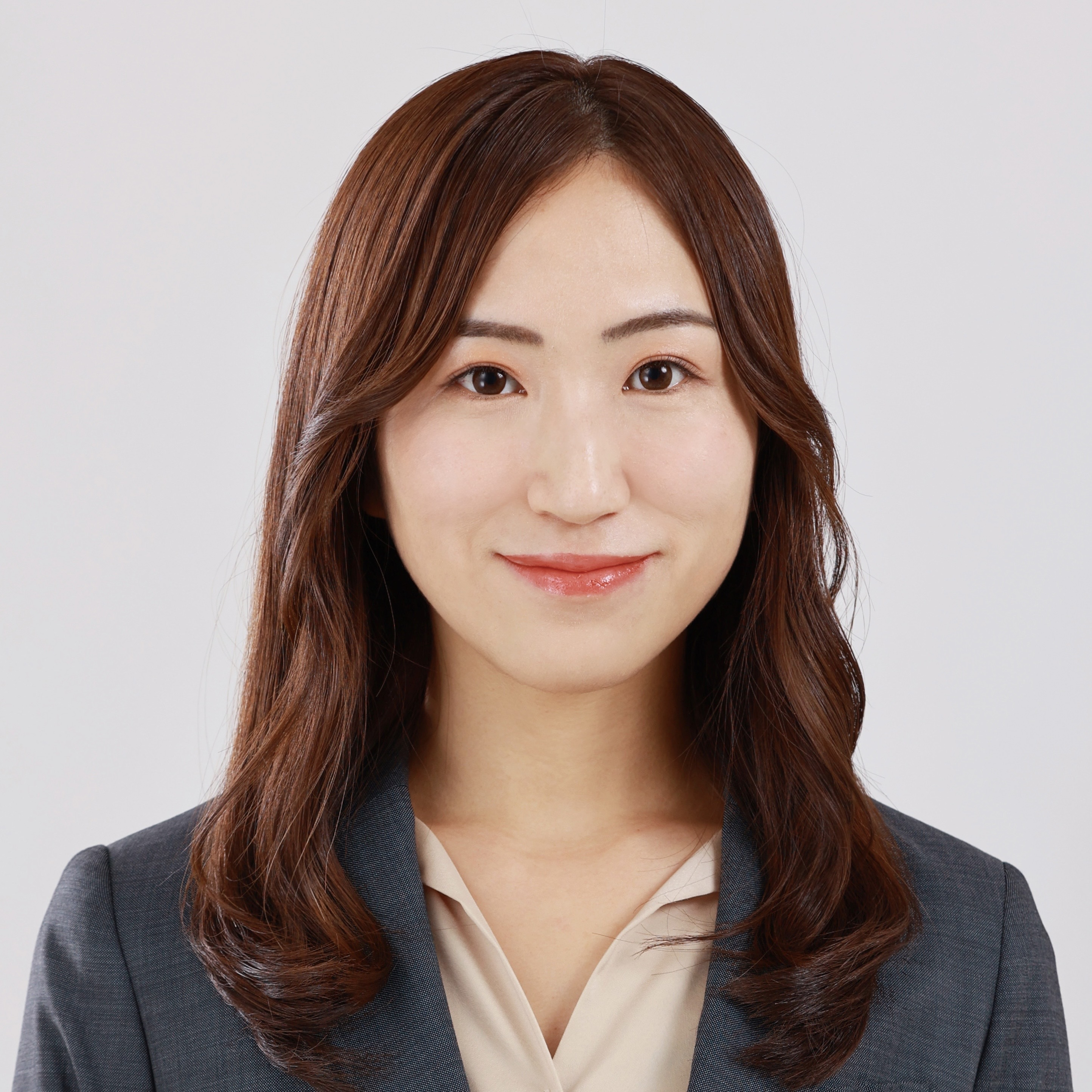
Akari Asai is an Assistant Professor at Carnegie Mellon University and is a Research Scientist at the Allen Institute for AI (AI2). She received her Ph.D. from the Paul G. Allen School of Computer Science & Engineering at the University of Washington. Her research advances reliable and up-to-date language systems, especially retrieval-augmented and agentic language models, and applies them to high-impact settings, including scientific discovery and information access for underrepresented languages. Her work has been published at top-tier NLP and ML venues and in Nature, and has been recognized with multiple paper awards, the AAAI/ACM SIGAI Doctoral Dissertation Award, the IBM Global Fellowship, MIT Technology Review's Innovators Under 35, and Forbes 30 Under 30 (Asia, Science).

Sean Welleck
Assistant Professor
Carnegie Mellon University
Toward Generalist Computer-Use Agents
Computer-use agents interact with software by seeing the screen and using a mouse and keyboard, giving them the potential to assist with a wide range of economically valuable tasks. In this talk, I will present Gym-Anything, a framework for turning any software into an environment for training and evaluating computer-use agents...
Toward Generalist Computer-Use Agents
Computer-use agents interact with software by seeing the screen and using a mouse and keyboard, giving them the potential to assist with a wide range of economically valuable tasks. In this talk, I will present Gym-Anything, a framework for turning any software into an environment for training and evaluating computer-use agents. I will discuss what Gym-Anything teaches us about developing general computer-use agents that can work reliably across the full range of software applications.
Bio
Sean Welleck is an Assistant Professor in the School of Computer Science at Carnegie Mellon University, where he leads the Learning, Language, and Logic (L3) Lab. His research spans AI and formal methods, AI agents, and the foundations of language models. He is also an Assistant Director of Scientific Activities at the NSF Institute for Computer-Aided Reasoning in Mathematics (ICARM). Sean received his PhD from New York University and was a postdoctoral scholar at the University of Washington and the Allen Institute for AI.